National Christian Centre Abuja

National Christian Centre Abuja: The Full Story Behind Nigeria’s House of Christian Unity
Table of Contents
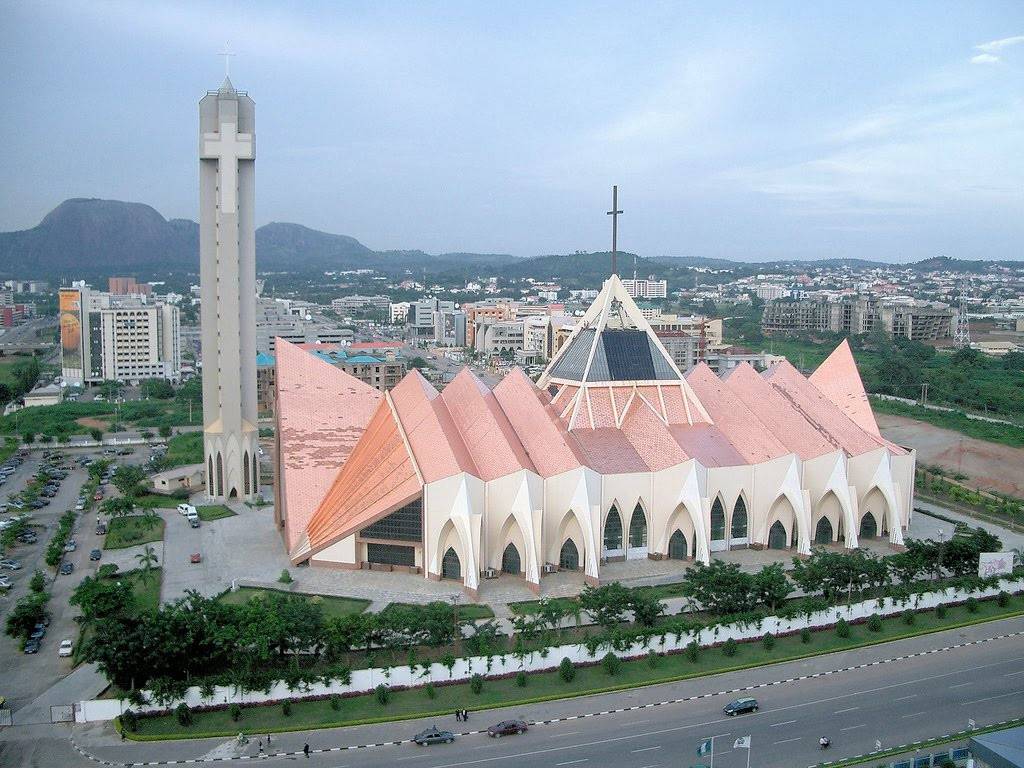
If you have ever driven through Abuja’s Central Business District, chances are your eyes have caught it — a soaring, cathedral-like structure with pointed arches and a spire that seems to reach straight into the sky, standing almost shoulder to shoulder with the Central Bank of Nigeria headquarters. That building is the National Christian Centre, popularly called the National Ecumenical Center, and it is one of the most spiritually significant landmarks in the Federal Capital Territory.
For visitors, worshippers, and even long-time Abuja residents who have only ever admired it from a distance, this guide breaks down everything you need to know — its history, exact address, how to get there, what it’s used for, who worships there, and why it matters so much to Nigeria’s Christian community.
What Is the National Christian Centre?
The National Christian Centre is a non-denominational Christian church building that serves as the spiritual and administrative heart of the Christian Association of Nigeria (CAN). Unlike a typical parish church that belongs to one denomination, this centre was built specifically to belong to all of Christendom in Nigeria — Catholic, Anglican, Pentecostal, Methodist, Baptist, Presbyterian, and other CAN-recognised blocs all have a stake in it.
It isn’t just a church in the ordinary sense. It functions as:
- A national house of worship open to Christians of every denomination
- The CAN national secretariat, where major decisions affecting Nigeria’s Christian community are coordinated
- A venue for national thanksgiving services, memorial services, and interdenominational gatherings
- A recognised architectural and tourist landmark in Abuja
In many ways, it mirrors the role the National Mosque plays for Nigeria’s Muslim community — the two structures sit close to each other in the city centre, a deliberate symbol of Nigeria’s religious pluralism and secular character.
The History: From a 1989 Idea to a 2005 Landmark
The story of the National Christian Centre stretches back nearly two decades before it was completed.
The idea of a national ecumenical centre was first proposed in the late 1980s, during General Ibrahim Babangida’s administration, as Abuja was being developed into Nigeria’s new capital. Construction broke ground around 1989, championed by the Christian Association of Nigeria as a unifying project for Christians nationwide.
For years, however, the project stalled. Funding challenges left the structure largely dormant — a half-finished shell for well over a decade. It wasn’t until 2004, under a newly elected CAN leadership led by Archbishop Peter Akinola, then Anglican Primate of Nigeria, that the project was revived with fresh urgency and resources. Remarkably, what had been “comatose” for 16 years was completed within roughly a year.
The centre was formally dedicated on 2 October 2005, in a ceremony presided over by Archbishop Peter Akinola. The timing was deliberate and symbolic — the dedication coincided with Nigeria’s 45th independence anniversary, tying the church’s completion to the nation’s own journey and identity.
The Italian construction firm Gitto Construction Company built the edifice, and its CEO, Dominica Gitto, was famously quoted describing it as comparable to the great cathedrals of the world he had photographed on his travels. Archbishop Akinola, dedicating the building, was also remembered for a memorable instruction to guests: that the building had been consecrated to the glory of God, and anyone wishing to smoke should step outside.

Architecture: A Postmodern Neo-Gothic Masterpiece
Designed by architect Dr. Dele Adeyemi (credited to the Lagos-based Darchiwork Group), the National Christian Centre blends Postmodern and Victorian Neo-Gothic styles — a fusion of soaring, traditional cathedral silhouettes with contemporary structural elements suited to modern Abuja.
Some standout architectural features that make it worth a visit even if you’re not attending a service:
- Pivoting arches that lead the eye straight to the altar
- A rotating altar placed at the very centre of the church — it completes a full rotation roughly every 10 minutes, allowing the whole congregation an equal view over the course of a service
- A pipe organ installed in the right wing, close to where the church choir sits during services
- Stained-glass windows in vivid red, green, and yellow tones, each carrying biblical imagery and symbolism
- High vaulted ceilings, lancet windows, and finials typical of Gothic cathedral design, reimagined for a Nigerian setting
- Well-kept surrounding gardens that offer a quiet, reflective space away from the busy CBD traffic
The result is a building that Nigerians and international visitors alike often compare, in scale and grandeur, to some of the great cathedrals of Europe — but distinctly rooted in Nigerian identity.

Address and Location: How to Find the National Christian Centre
The National Christian Centre sits in the Central Business District (CBD) of Abuja, directly beside — and considered the most significant neighbour of — the Central Bank of Nigeria (CBN) headquarters. It also stands close to Nigeria’s National Mosque, forming a striking visual pairing that reflects the country’s religious diversity.
Commonly cited address details:
- Central Business District, Abuja, FCT, Nigeria (Postal code: 900211)
- Located along/near Sani Abacha Way, close to Church Gate Street, off Samuel Maduemezie Street, Central Area
- Directly opposite/beside the Central Bank of Nigeria headquarters
(Note: because the centre sits within a cluster of major CBD landmarks, using “National Christian Centre, opposite CBN Headquarters, Abuja” on Google Maps or a ride-hailing app is usually the fastest way to get an accurate pin.)
Directions
By car: From most parts of Abuja, head towards the Central Business District via Herbert Macaulay Way or Constitution Avenue, then connect to Sani Abacha Way. The centre’s tall spire is visible from a distance and makes a reliable visual landmark as you approach. Parking is available around the premises, though a small fee may apply.
By public transport: Buses and shared taxis running into the Central Business District from major motor parks around the city (including routes from areas like Gwarinpa, Wuse, and Garki) will get you within walking distance. From the AYA Roundabout area, buses heading into the CBD can drop you close to Sani Abacha Way, from where it’s a short walk.
By okada/keke or ride-hailing apps: Simply search “National Christian Centre” or “National Ecumenical Centre, Abuja” — most local riders and drivers recognise the landmark instantly because of its proximity to the CBN headquarters.

Who Uses the National Christian Centre?
This is one of the most distinctive things about the building: it does not belong to a single church or denomination. It was built and is run under the umbrella of the Christian Association of Nigeria (CAN), the apex body representing Nigeria’s major Christian blocs, including:
- The Catholic Church
- The Christian Council of Nigeria (CCN) bloc — mainline Protestant churches such as Anglican, Methodist, Presbyterian, and Baptist
- The Pentecostal Fellowship of Nigeria (PFN)
- The Organisation of African Instituted Churches (OAIC)
- The Evangelical Church Winning All (ECWA) and other evangelical bodies bloc (TEKAN)
Because of this structure, the centre hosts services and events that draw worshippers across denominational lines — a rare thing in a country where churches are often fiercely distinct in doctrine and worship style. On any given Sunday, or during a national service, you may find Catholics, Anglicans, Pentecostals, and Evangelicals all seated in the same auditorium, united under one roof.

What Happens There: Services and Notable Events
The National Christian Centre is best known for hosting events of national significance rather than functioning like a typical weekly-attendance parish. Some of what it’s regularly used for includes:
- Sunday worship services, open to the public and often led on a rotating or joint basis reflecting its interdenominational character
- National thanksgiving and dedication services, sometimes tied to Nigeria’s independence anniversary given the church’s own dedication date
- State and national memorial or funeral services for prominent Nigerians and public figures
- CAN administrative and leadership events, since the centre doubles as the association’s national secretariat
- Prayer services for national issues, including gatherings where CAN leadership has called on the Christian community to pray for peace and security in the country
- Interdenominational conferences and ceremonies bringing together clergy and lay leaders from across Nigeria’s Christian spectrum
Because of this, the centre is as much a civic and diplomatic venue as it is a place of worship — heads of state, foreign dignitaries, and religious leaders have all passed through its doors over the years for one national occasion or another.
Visiting as a Tourist: What to Expect
You don’t need to be Christian, or even religious, to appreciate a visit to the National Christian Centre. It is widely listed among Abuja’s must-see landmarks, alongside the National Mosque, Aso Rock, and the National Assembly Complex.
A few practical tips if you’re planning a visit:
- Dress modestly. Out of respect for the sacred nature of the building, modest attire is advised, especially if you’re visiting during a service.
- Check timing in advance. Public access can vary depending on whether a service or private event is ongoing. It’s generally more accessible on days outside major public holidays.
- Guided tours are available. Trained guides can walk you through the architecture, the rotating altar, the pipe organ, and the history behind the centre’s construction — well worth it if you want more than a quick photo stop.
- Bring your camera. The stained-glass windows and gothic arches make for some of the most striking architectural photography you’ll find in Abuja.
- Respect service times. In some cases, public touring is only permitted with a guide, or is restricted while worship is actually taking place.
Why the National Christian Centre Matters
Beyond its architecture, the National Christian Centre carries deep symbolic weight. Its very existence — a single building representing dozens of denominations under one roof — speaks to an ideal of Christian unity that isn’t always easy to achieve in practice. Its physical closeness to the National Mosque, both standing prominently in Abuja’s CBD, is often pointed to as a quiet but powerful statement about Nigeria’s identity as a religiously diverse, secular nation where different faiths exist side by side.
For visitors to Abuja, it offers a rare combination: a working church, a national monument, a piece of architectural history, and a symbol of interfaith and interdenominational coexistence — all in one visit.
Frequently Asked Questions
Is the National Christian Centre the same as the National Ecumenical Center? Yes. “National Ecumenical Centre” was its original name; it is now more commonly referred to as the National Christian Centre, though both names are still widely used interchangeably.
Which denomination owns the National Christian Centre? No single denomination owns it. It is a non-denominational church run under the Christian Association of Nigeria (CAN), representing Catholic, Anglican, Pentecostal, Evangelical, and other Christian blocs in Nigeria.
When was the National Christian Centre built? Construction began around 1989, stalled for many years, and was revived and completed between 2004 and 2005. It was formally dedicated on 2 October 2005.
Who designed the National Christian Centre? The building was designed by architect Dr. Dele Adeyemi in a Postmodern Neo-Gothic style, and constructed by the Italian firm Gitto Construction Company.
Can non-Christians or tourists visit the National Christian Centre? Yes. It is open to visitors as a landmark and place of interest, with guided tours available, although access may be restricted during private services or events.
Where exactly is the National Christian Centre located? It is located in the Central Business District of Abuja, close to Sani Abacha Way, directly beside the Central Bank of Nigeria headquarters.
What is the rotating altar inside the church? The altar sits at the exact centre of the church and slowly rotates, completing a full turn roughly every 10 minutes, so that different sections of the congregation face it over the course of a service.
Conclusion
The National Christian Centre is far more than a striking building on the Abuja skyline — it’s a living symbol of what Nigeria’s Christian community has tried to build together: unity across denominational lines, in one of the most architecturally ambitious churches on the continent. Whether you’re a worshipper looking for a Sunday service unlike any other, a history enthusiast curious about a project that took 16 years to complete, or simply a visitor to Abuja hunting for the city’s most photogenic landmarks, the National Christian Centre deserves a place on your itinerary.
Other Publications to check out