Abuja City Gate: History, Location, Photos, Directions and Interesting Facts
Table of Contents
The Abuja City Gate is one of the most recognisable landmarks welcoming visitors into Nigeria’s capital. Whether you are arriving in Abuja for the first time, travelling from the airport, or simply exploring the city, this imposing monument is one of the structures that helps announce your arrival in the Federal Capital Territory (FCT).
Located in Kukwaba along the Airport Road approach, the Abuja City Gate is more than just a concrete structure. It represents Abuja’s identity as Nigeria’s federal capital and recalls the historic transition of the seat of government from Lagos to Abuja in the early 1990s.
If you have ever searched for Abuja City Gate photos, wondered about the Abuja City Gate location, or wanted to know where to find the famous Welcome to Abuja City Gate landmark, this guide covers its history, architectural features, significance, directions, photography opportunities and what visitors should know before going there.

Abuja City Gate at a glance
Location




Kukwaba, Airport Road, Abuja, Federal Capital Territory, Nigeria
Type of attraction
Monument and national landmark
Year built
1991
Approximate height
25 metres (82 feet)
Entrance fee
₦0 — no general admission fee is listed for viewing the monument from the public area. Access to any future recreational facilities may have separate conditions.
Directions Open Abuja City Gate in Google Maps
Where is Abuja City Gate located?
The Abuja City Gate is located in Kukwaba, along the Airport Road approach to Abuja, within the Federal Capital Territory. It serves as a ceremonial gateway marking the entrance into Abuja city proper.
Its position is significant because Airport Road is one of the main routes connecting Nnamdi Azikiwe International Airport with the central parts of the capital. Travellers arriving by road from the airport may encounter the monument as they approach the city.
The landmark is commonly associated with the phrase “Welcome to Abuja,” reflecting its role as a symbolic entrance into the capital.
For visitors coming from other parts of Nigeria, the gate can be a useful reference point when navigating the approach to central Abuja. However, it is important to remember that Abuja is a large city, and reaching the City Gate does not necessarily mean you have arrived at your final destination.
Abuja City Gate address: Kukwaba, Airport Road, Abuja, FCT, Nigeria.
To navigate directly to the landmark, use the Abuja City Gate Google Maps directions.
The history of Abuja City Gate
The story of the Abuja City Gate is closely connected to the history of Abuja itself.
When Nigeria decided to move its federal capital from Lagos to Abuja, the new capital needed landmarks that reflected its national importance. The Abuja City Gate was constructed in 1991, during the administration of General Ibrahim Babangida, as a ceremonial monument commemorating the relocation of the national capital.
Its purpose was straightforward: to welcome people arriving in the capital and create a recognisable entrance into the city.
Over the years, the monument became a familiar sight to residents, visitors, government officials and travellers arriving from Nnamdi Azikiwe International Airport. It also became a popular background for photographs and a visual symbol of Abuja’s identity.
However, the landmark’s history has not been entirely straightforward. In 2012, the original structure was dismantled and relocated as part of work associated with the expansion of Airport Road. This was an important development because it showed how the city’s infrastructure projects could affect even its most recognisable monuments. Channels Television+1
The 2025–2026 renovation and transformation

The Abuja City Gate has undergone a major transformation in recent years. According to reports from the Federal Capital Territory Administration and Julius Berger Nigeria Plc, the redevelopment contract was awarded in November 2025, following years of deterioration and calls to improve the monument.
The project was inspired in part by concerns raised by Nigeria’s First Lady, Senator Oluremi Tinubu, about the condition and appearance of the gateway. Julius Berger carried out the redesign and rehabilitation work in collaboration with the relevant FCT authorities. Abuja Digest+1
The renovated landmark was officially commissioned on July 9, 2026, during activities marking the third anniversary of President Bola Ahmed Tinubu’s administration and the 50th anniversary of the Federal Capital Territory. Tribune Online+1
The transformation went beyond repairing the original concrete structure. It introduced a more developed public space, with landscaping, illumination, visitor facilities and recreational features intended to make the City Gate an attraction in its own right.
This is an important update for anyone researching older information about Abuja City Gate. Articles and photographs published before the renovation may show the former appearance of the monument rather than the present-day site.
What does Abuja City Gate look like?
The original monument is known for its striking concrete architecture and three-arched design. Standing approximately 25 metres (82 feet) high, it was built to be visible and recognisable to people approaching the capital.


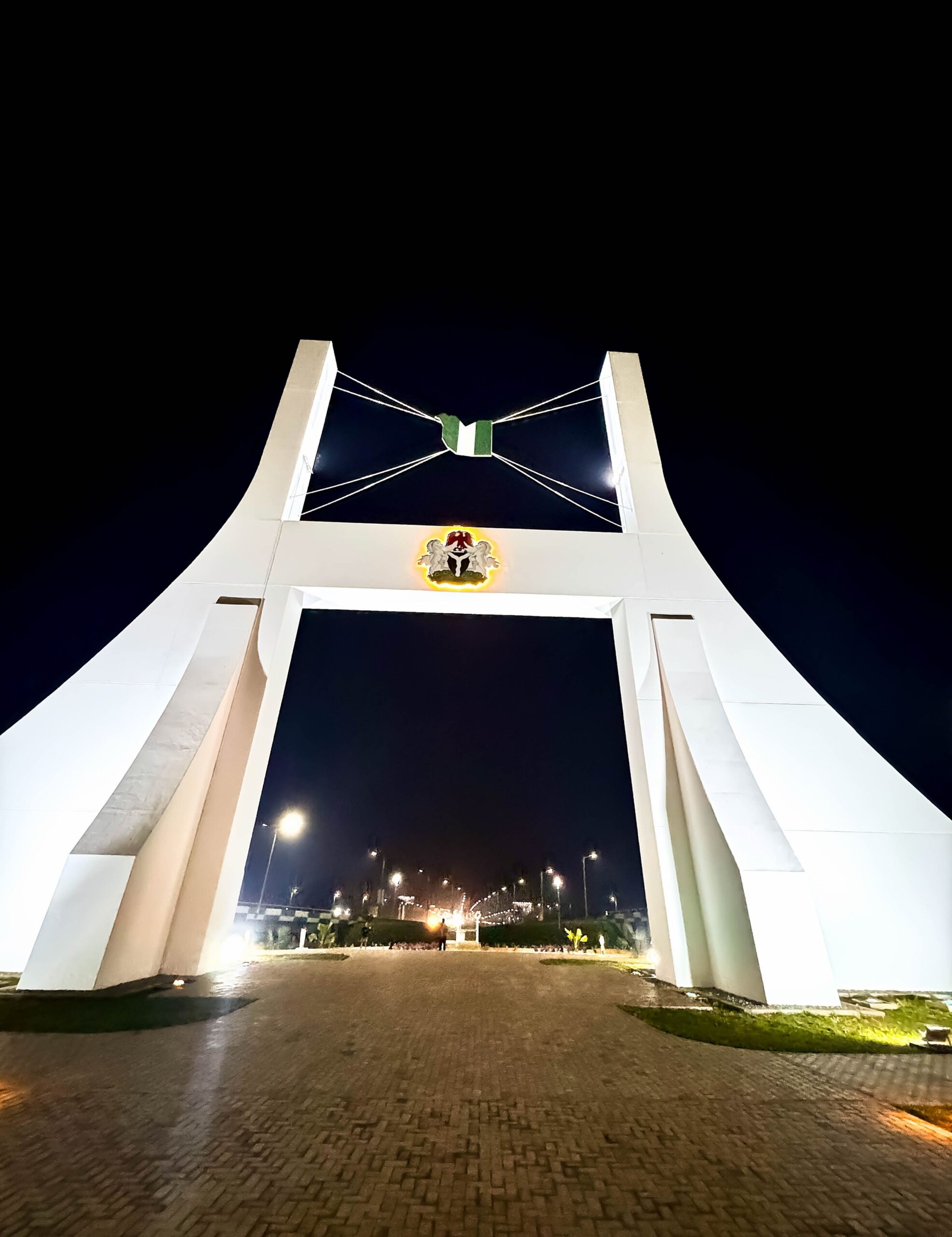
Its main architectural features include:
- Three arches: The design features two large inverted columns framing the Nigerian flag, with a smaller central arch bearing the national coat of arms.
- National symbols: The Nigerian flag and coat of arms reinforce the monument’s role as a symbol of the country and its capital.
- The welcome inscription: The structure has been associated with the words “You Are Welcome,” reflecting its purpose as a ceremonial entrance.
- Concrete construction: The original structure was built from concrete, giving it the scale and solidity expected of a major public monument.
The redesigned site has added further visual features, including a Unity Fountain with 37 water jets representing Nigeria’s 36 states and the Federal Capital Territory. It also includes an elaborate irrigation system, landscaping, lighting and visitor amenities
Together, these features give the monument a more contemporary appearance while preserving its historical identity.
Abuja City Gate at night

The renovated Abuja City Gate has become an evening attraction as well as a daytime landmark. Its illumination and fountain give the site a different character after sunset, making it appealing to people looking for somewhere to take photographs or enjoy a short outdoor visit.
The lighting helps define the monument’s shape against the evening sky, while the fountain and landscaped surroundings add visual interest. Reports following the renovation have described the site as a destination for visitors both during the day and at night. Tribune Online+2
If you plan to visit in the evening, keep a few practical points in mind. Check the latest access arrangements, visit with friends or family if you prefer company, keep an eye on personal belongings and use designated parking areas rather than stopping along the expressway.
The site may be busier on weekends, public holidays and special occasions. If you want clearer photographs with fewer people in the background, an earlier visit may be preferable.
Abuja City Gate Kukwaba photos: Understanding the location
Searches for “Abuja City Gate Kukwaba photos” generally refer to images of the monument in the Kukwaba area, close to the National Stadium complex and the major roads connecting the area with the rest of the capital.
Kukwaba is important to the landmark’s identity because it places the City Gate within Abuja’s wider road and urban infrastructure. The monument is not simply an isolated structure in a park; it forms part of a prominent approach into the capital.
Photographs taken from different positions may show different aspects of the site. Some focus on the main arches, while others capture the adjoining roads, the fountain or the wider landscaped area.
For accurate navigation, use the landmark’s map pin rather than relying on a photograph alone. You can also compare the image location with the address provided above to avoid confusing the City Gate with other monuments and gateways around Abuja.
Aerial view of Abuja City Gate
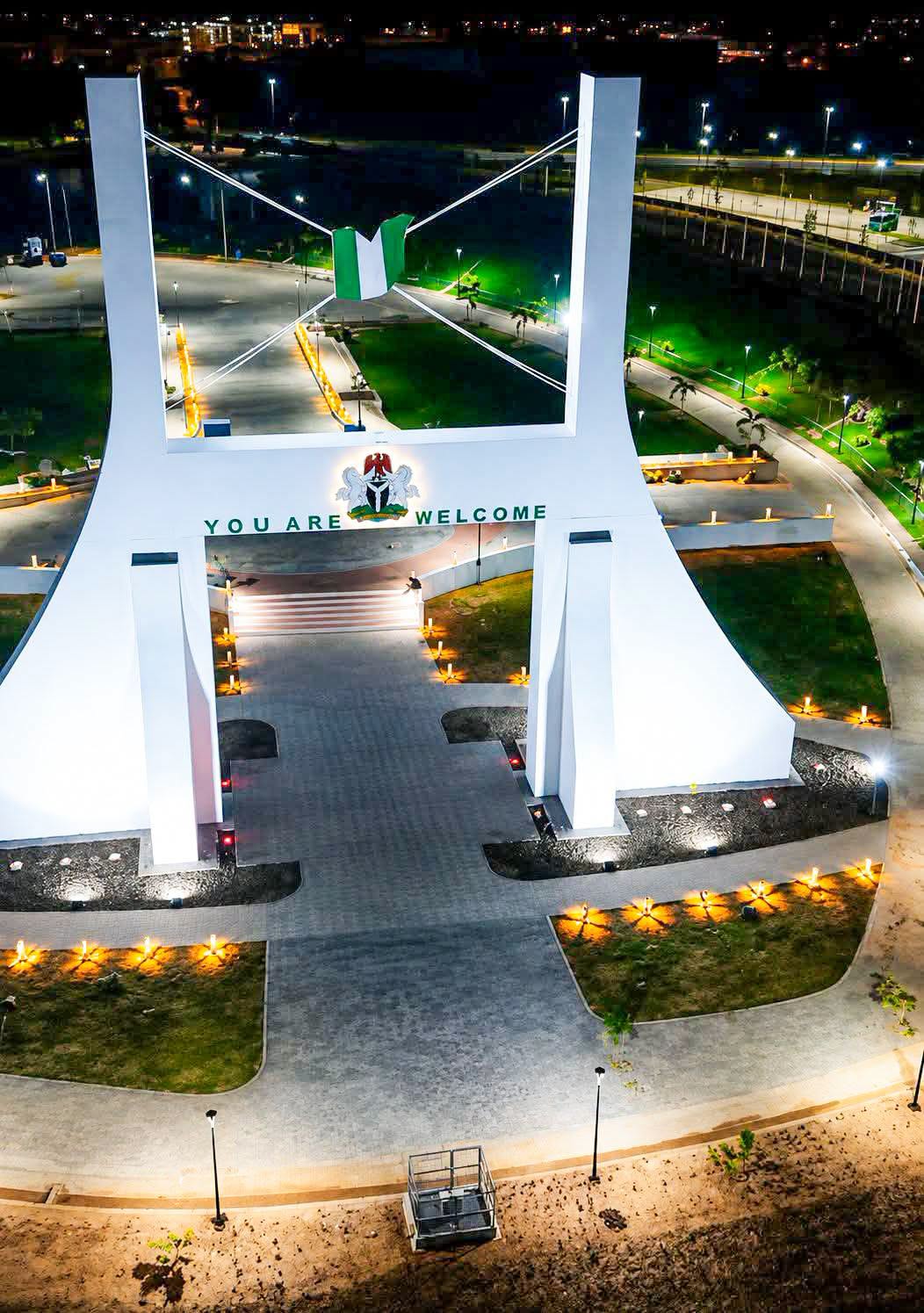
An aerial view of Abuja City Gate provides a different perspective from the usual roadside photograph. Instead of focusing only on the arches, it can reveal the surrounding road junctions, the arrangement of the public space, the fountain and the landscaping introduced during the renovation.
This perspective is useful for understanding the monument’s position within Abuja’s transport network and its relationship with the wider Kukwaba area.
Aerial photographs may also help travel writers, researchers and photographers document the redevelopment of the site. However, drone operations around major roads, public infrastructure and sensitive government locations should not be undertaken without checking the relevant permissions and aviation rules.
For visitors who do not have access to aerial photography, satellite imagery on Google Maps provides a useful alternative for viewing the location and surrounding road layout.
How to get to Abuja City Gate
You can reach the landmark by private car, taxi or a ride-hailing service. If you are travelling from Nnamdi Azikiwe International Airport towards the city, the City Gate is located along the airport approach.
If you are coming from central Abuja, enter “Abuja City Gate” in your navigation app and follow the directions to the designated visitor access point. The actual journey time will depend on your starting point and traffic conditions.
Use this direct link for navigation: Get directions to Abuja City Gate.
One important safety reminder: do not stop in the middle of Airport Road or on an expressway shoulder to take photographs. Use the designated parking or visitor areas and follow any instructions from security personnel.
What can you do at Abuja City Gate?
The renovated site is intended to serve as more than a landmark that motorists simply pass on their way into Abuja. Its upgraded facilities are designed to make the location more welcoming to residents and visitors.
Depending on the access arrangements and facilities available during your visit, you may be able to:
- Take photographs of one of Abuja’s most recognisable landmarks.
- View the Unity Fountain and landscaped surroundings.
- Enjoy the monument’s architectural design and national symbolism.
- Visit in the evening to see the illumination.
- Spend a short period outdoors with friends or family.
- Document the site for travel content, photography or an Abuja sightseeing itinerary.
The redevelopment includes visitor-oriented infrastructure such as a car park with capacity for approximately 60 vehicles, toilet facilities and security services. Plans have also been reported for additional support facilities around the wider site. Tribune Online+1
These facilities make the City Gate a more practical stop for visitors than it was when the location was primarily known as a roadside monument.
Nevertheless, individual facilities may be subject to operational arrangements, maintenance or restrictions. It is sensible to confirm access before travelling specifically to use a particular facility.
Is Abuja City Gate free to visit?
The general entrance price listed for Abuja City Gate is ₦0, meaning there is no general admission fee listed for visiting the monument and viewing it from the public area.
Reports following the redevelopment have also described free access to the recreational site. placetogoto.com+1
You should, however, distinguish between free public access and any future paid services, events or commercial activities. Parking arrangements, special events and the use of particular facilities may be governed by separate rules.
If you are planning a visit with a group, or intend to organise a photoshoot, it is worth checking whether advance permission is required.
Why is Abuja City Gate important to Nigeria?
Abuja City Gate represents several things at once: the identity of the capital, the history of the relocation of the federal government and the importance of public monuments in defining a city.
First, it commemorates the movement of Nigeria’s national capital from Lagos to Abuja. The construction of the monument in 1991 placed it within a major period of change in the country’s administrative history.
Second, its national symbols communicate unity and national identity. The Nigerian flag and coat of arms are prominent features of the monument, while the redesigned fountain’s 37 jets represent the country’s 36 states and the FCT. Wikipedia+1
Third, the City Gate gives Abuja a recognisable point of arrival. For people entering the capital from the airport, it helps create a sense of entering a distinct urban and administrative centre.
Finally, the recent renovation reflects a broader interest in improving Abuja’s public spaces and tourism infrastructure. The site has the potential to serve as a place for photography, sightseeing and outdoor recreation while preserving its historical role.
Is Abuja City Gate worth visiting?
For someone exploring Abuja, the City Gate is worth considering, especially if you have an interest in architecture, local history or photography.
It is not a conventional museum, and you should not expect a long indoor exhibition explaining the history of the capital. Instead, it is an outdoor monument whose appeal comes from its architecture, symbolism, location and newly developed surroundings.
A visit may be particularly worthwhile if you are already travelling along Airport Road or exploring attractions around Kukwaba. You can combine it with other stops around the capital, depending on how much time you have.
For photography enthusiasts, the renovated fountain and evening illumination provide additional reasons to visit. For residents, the monument is also a reminder of how a familiar part of the city can take on a new purpose following redevelopment.
Frequently asked questions about Abuja City Gate
1. Where is Abuja City Gate located?
Abuja City Gate is located in Kukwaba, along Airport Road in the Federal Capital Territory, Nigeria, near the National Stadium complex. You can open its location in Google Maps.
2. What is the address of Abuja City Gate?
The commonly used address is Abuja City Gate, Kukwaba, Airport Road, Abuja, FCT, Nigeria.
3. When was Abuja City Gate built?
The monument was originally erected in 1991 during the administration of General Ibrahim Babangida to commemorate the relocation of Nigeria’s capital from Lagos to Abuja.
4. How tall is Abuja City Gate?
The original monument is approximately 25 metres (82 feet) high.
5. What does Abuja City Gate represent?
It symbolises the entrance into Nigeria’s federal capital and commemorates the transfer of the national capital from Lagos to Abuja. Its flag and coat of arms also represent Nigerian national identity.
6. Is Abuja City Gate free to visit?
The general entrance price is listed as free. However, visitors should confirm current access arrangements and whether particular events or services have separate conditions.
7. Can I take pictures at Abuja City Gate?
The site is a popular photography location. The renovated surroundings provide opportunities for architectural photographs, fountain images and evening photography. Follow site rules and any security instructions, especially if using professional equipment.
8. Is Abuja City Gate beautiful at night?
The renovated monument has illumination and a fountain, making it visually distinctive after dark. Evening visits can be suitable for photography, although lighting, crowd levels and access conditions may vary.
9. What is the best time to visit Abuja City Gate?
Morning and late afternoon are useful for photographing the monument in natural light. Evening is worth considering if you want to capture the illumination and fountain. Check current access arrangements before travelling.
10. Can I get an aerial view of Abuja City Gate?
Yes. Aerial imagery can show the monument, its fountain, landscaping and surrounding roads. Satellite imagery is another option. Anyone planning to fly a drone should check applicable aviation and security requirements and obtain any necessary permissions.
11. Has Abuja City Gate been renovated?
Yes. The monument underwent a major redevelopment and was officially commissioned in its remodelled form on July 9, 2026. The upgrade included a Unity Fountain, landscaping, illumination and visitor facilities. Tribune Online+1
12. What is the significance of the fountain at Abuja City Gate?
The Unity Fountain features 37 jets representing Nigeria’s 36 states and the Federal Capital Territory. It was introduced as part of the redevelopment to reinforce the monument’s message of national unity.
13. Is Abuja City Gate close to the airport?
The monument is located along the Airport Road approach connecting Nnamdi Azikiwe International Airport with Abuja. The journey time to or from the airport will depend on traffic and the precise starting point.
14. Can I visit Abuja City Gate with my family?
The renovated site is intended to support recreation and sightseeing, making it a potential stop for families. Check the latest access arrangements, available facilities and safety guidance before your visit.
15. Where can I find recent Abuja City Gate photos?
You can look for recent images through news coverage of the July 2026 commissioning, the FCT Administration website, and visitor posts on social media. When researching the renovated monument, check the publication date so you do not mistake older photographs for the current appearance.
Conclusion
Abuja City Gate is more than a landmark beside a major road. Built in 1991 to commemorate the relocation of Nigeria’s capital from Lagos to Abuja, it has become one of the city’s most recognisable symbols.
Its 2026 transformation has given the monument a new role, combining its original national significance with a fountain, lighting, landscaping and visitor-oriented facilities. Whether you want to understand its history, find the exact location, take Abuja City Gate photos or see the monument at night, there is more to explore than the familiar structure motorists see on their way into the capital.
If you are planning a visit, use the Google Maps directions, follow the site’s access and safety rules, and check the latest information before setting out.
For residents and visitors alike, Abuja City Gate remains an important part of the story of Nigeria’s capital and a landmark worth knowing.