Mpape – The Biggest slum in Abuja
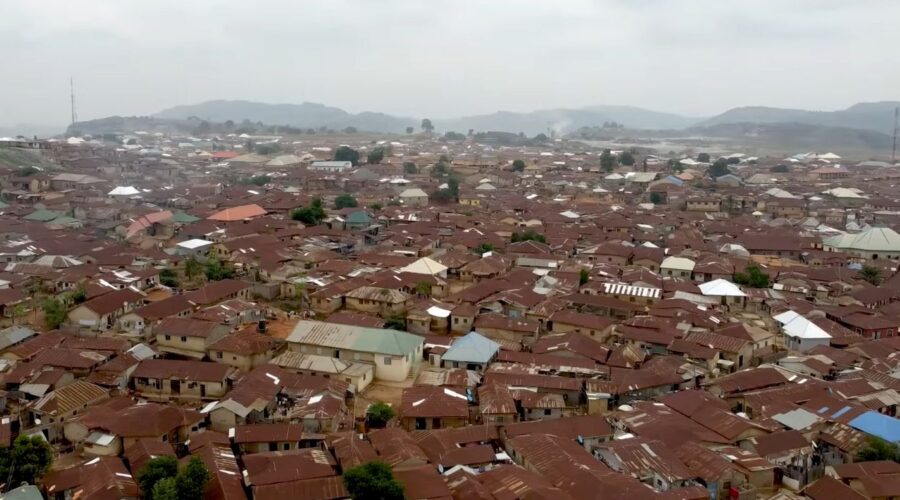
Mpape: The Shocking Reality of Abuja’s Biggest Slum with 1 Million+ Residents
Table of Contents
Introduction: Two Abujas – One City
Abuja, Nigeria’s federal capital, presents two strikingly different faces. While the world sees gleaming government buildings and luxury districts like Maitama, hidden in plain sight lies Mpape – a sprawling settlement that tells a completely different story. This is the harsh reality of what life looks like inside the biggest slum community in Nigeria’s capital city.
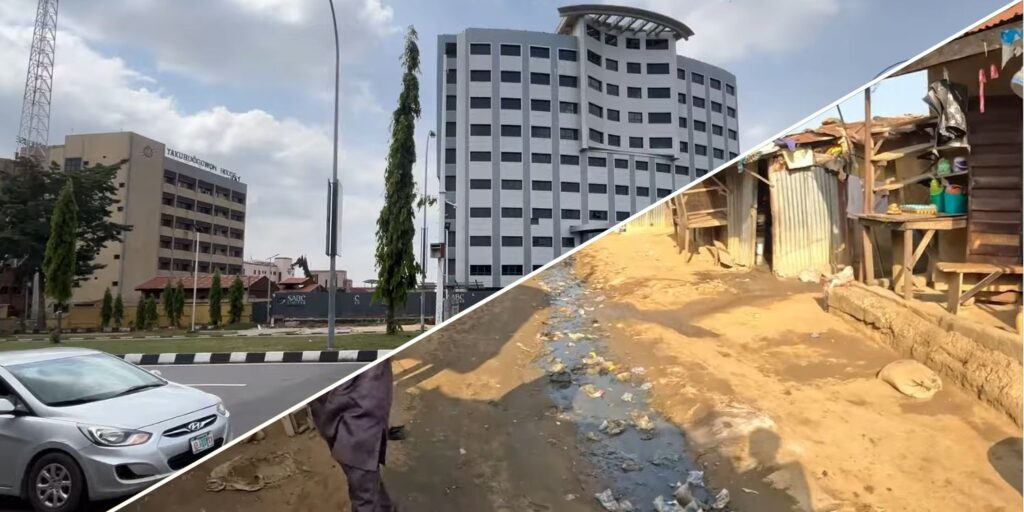
With over 1 million residents packed into a single neighborhood, Mpape has become the largest informal settlement in Abuja. The irony? This densely populated community sits directly opposite Maitama district, separated only by the 10-lane Murtala Mohammed Expressway – a stone’s throw from one of Nigeria’s wealthiest neighborhoods.
Where is Mpape Located in Abuja?
Geographic Location and Boundaries
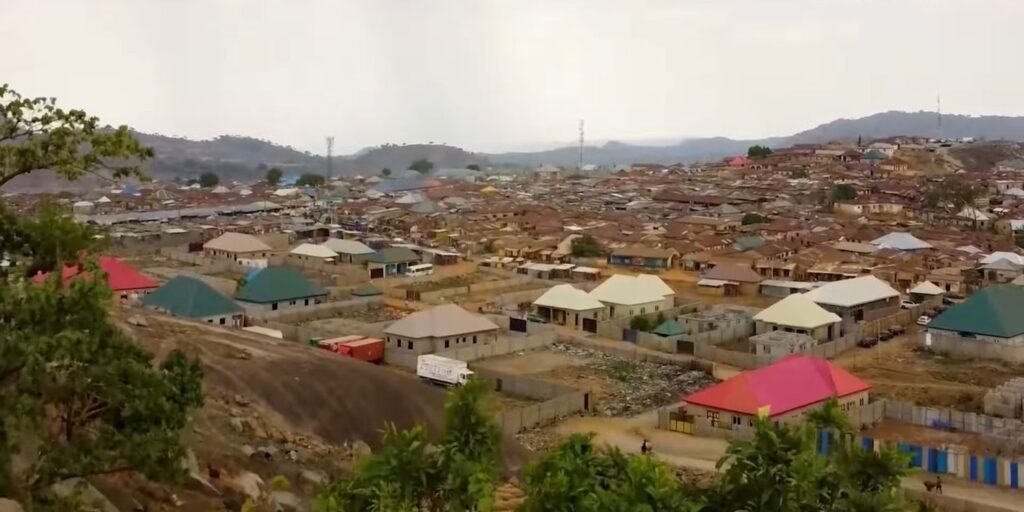
Mpape is strategically positioned in the Federal Capital Territory (FCT), falling under the administrative jurisdiction of Bwari Area Council. The settlement lies between Latitudes 9.175699° and 9.113010° north of the equator and Longitudes 7.463892° and 7.524349° east of the Greenwich Meridian, occupying a land area of 44.325 hectares.
The community is located:
- South: Directly across from Maitama district via the Murtala Mohammed Expressway
- Southwest: Adjacent to Katampe
- North: Connected to other parts of Bwari Area Council
- East: Near various military barracks and government institutions
Mpape Junction and Directions
Mpape Junction serves as the primary access point to the community from the expressway. The junction connects the settlement to central Abuja and is easily accessible from major districts:
- From Maitama: Less than 10 minutes’ drive across the expressway
- From Asokoro: Approximately 15-20 minutes via the Murtala Mohammed Expressway
- From Gwarinpa: About 20 minutes heading south
- From Kubwa: Approximately 25-30 minutes through connecting roads
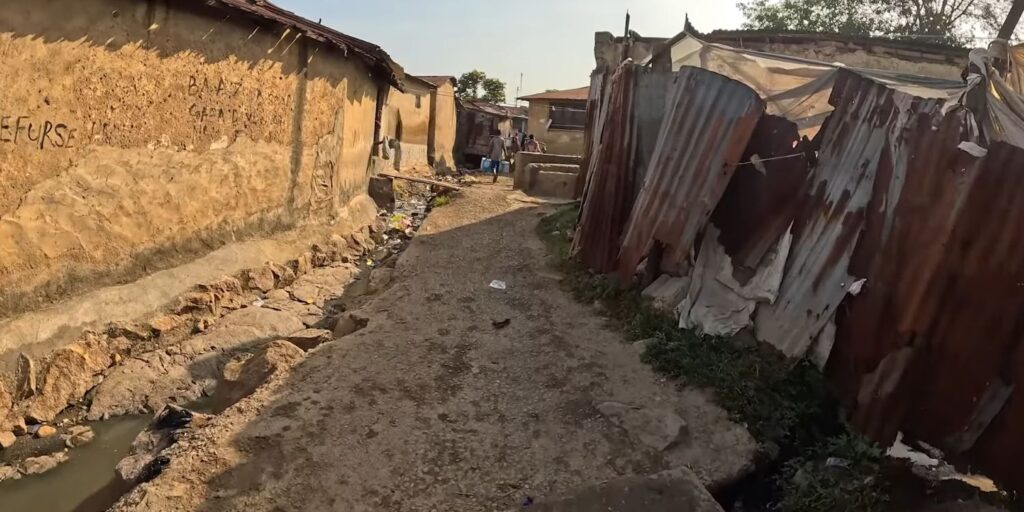
The single main tarred road snakes upward into the hilly terrain, leading deep into the community’s various neighborhoods.
Understanding Mpape’s Origins: Built on Rocks and History
The Quarry Legacy
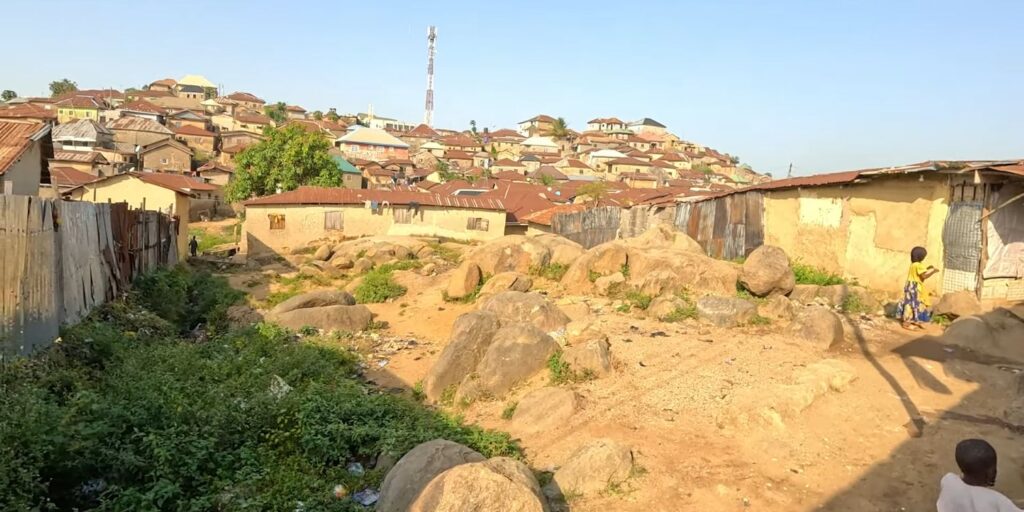
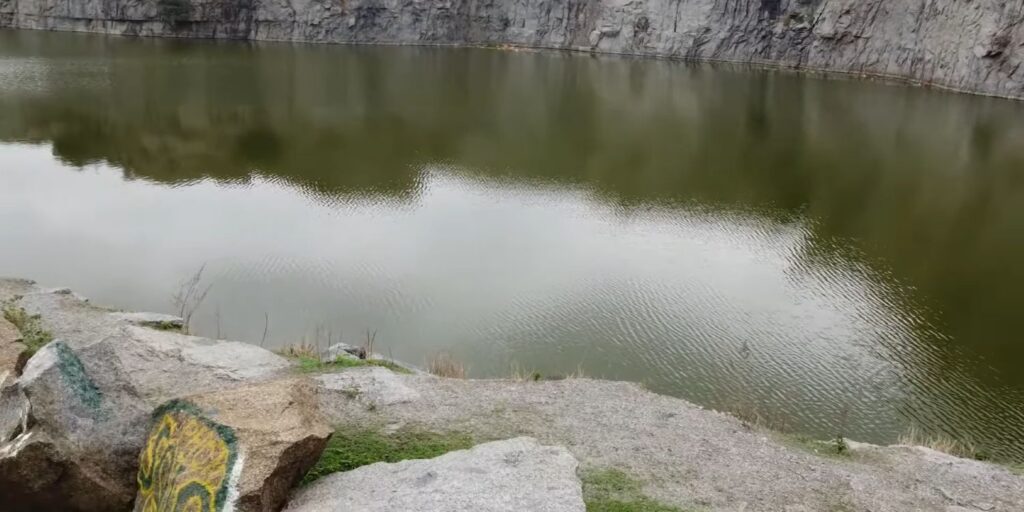
Mpape’s story is inseparable from Abuja’s own development. The community is built predominantly on rocky, hilly terrain that once served as the primary source of building materials for the federal capital. The name “Mpape” itself is derived from this rocky landscape.
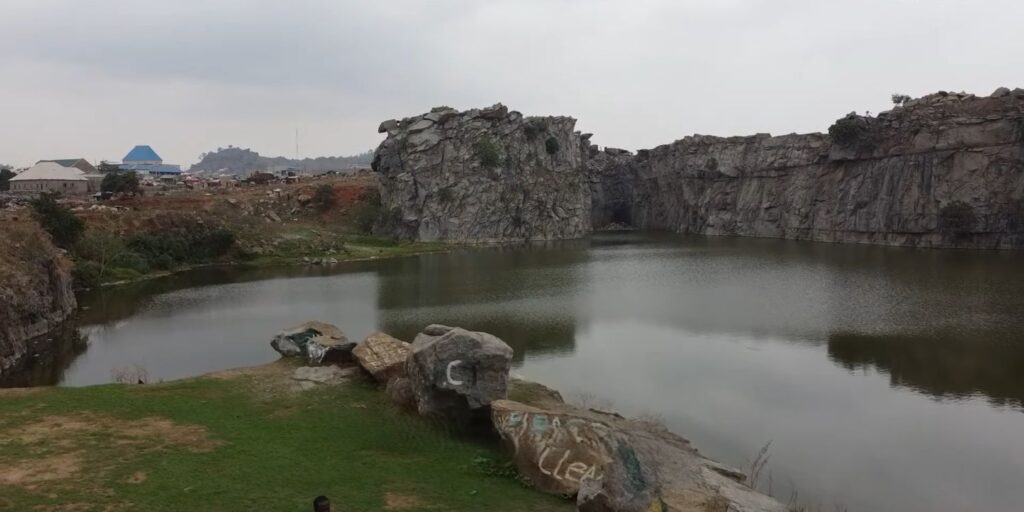
The area hosted major quarrying and mining operations during Abuja’s construction boom. Among these sites is the famous Mpape Crushed Rock (also called Berger Quarry), where stone and aggregates were extracted to build the modern capital city. While many quarry sites were eventually abandoned, others continue operating today, occasionally causing earth tremors that remind residents of the area’s geological instability.
From Quarry to Community
As Abuja expanded and other informal settlements faced demolition by the Federal Capital Development Authority (FCDA), displaced residents flocked to Mpape. The community’s population swelled dramatically, particularly following demolition exercises in areas like Karmo, Mabushi, and other parts of the FCT.
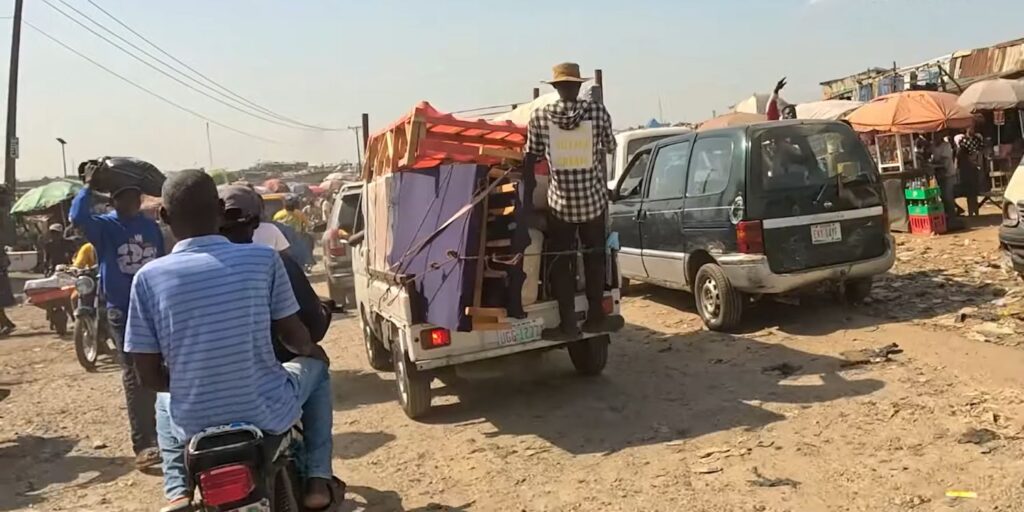
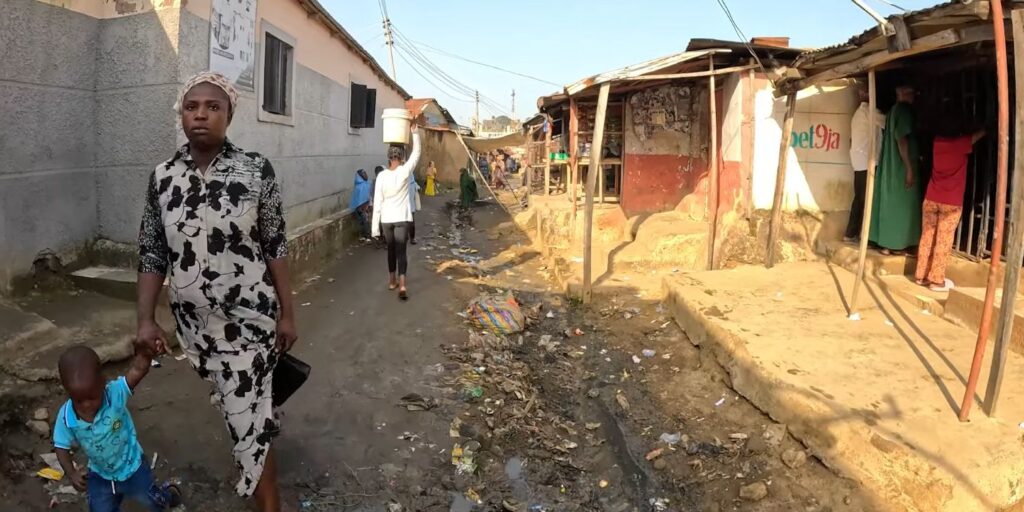
Today, Mpape has transformed from a quarry workers’ settlement into a massive urban slum housing everyone from daily laborers to middle-class workers seeking affordable accommodation near the city center.
Areas and Villages Within Mpape
The community has evolved into distinct neighborhoods and phases, each with its own character:
Main Areas in Mpape:
- Mpape Phase I: The original settlement area
- Mpape Phase II: Newer expansion areas
- Unguwar Rimi: One of the most densely populated sections
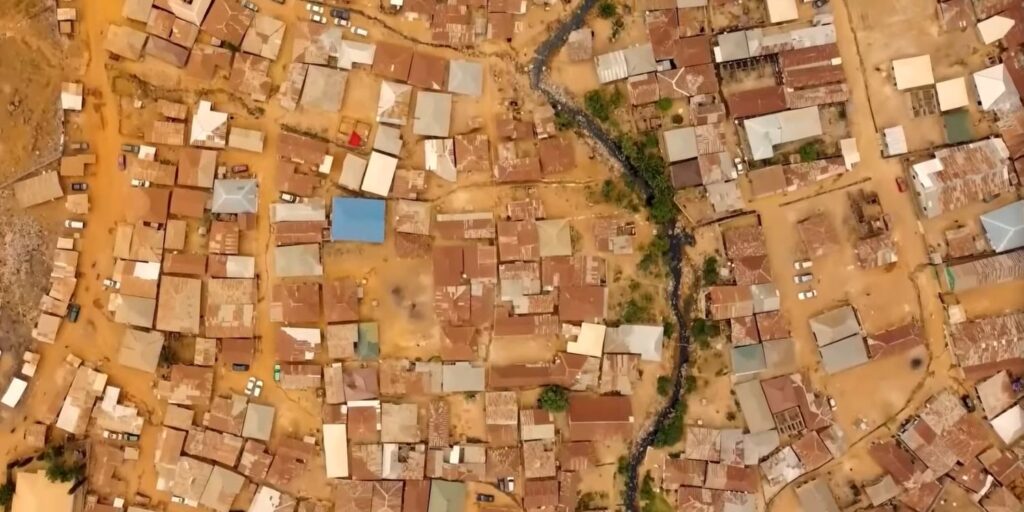
- Unguwar Usuma: Known for its tight, unplanned housing structures
- Masafa Road: Characterized by narrow roads and open drainage
- Berger Yard (Berger Quarry Area): Considered the more upscale section, reserved for relatively wealthier residents
- Gwari Village: Home to the indigenous Gbagyi (Gwari) people
- Crushrock Area: Named after the crushing operations
- Back of Crushed Rock Mpape: Residential area behind the quarry sites
- P.W Neighbourhood: Near the Mobile Police (MOPOL) 24 barracks
- Arab Road Area: Interior section of the community
While areas like Gwari Village, Unguwar Rimi, Masafa Road, and Unguwar Usuma exhibit typical slum characteristics with unplanned housing and open drainages, the Berger Quarry Area is considered more affluent.
Mpape Population: How Many People Call This Place Home?
The Numbers Tell a Staggering Story
Population estimates for Mpape vary depending on the source, but all point to an enormous concentration of humanity:
- Video documentation: Over 1 million residents
- Mpape Community Development Association census: Approximately 60,000 houses with hundreds of thousands of residents
- Recent reports: Over 2 million population according to the District Head
The discrepancies in figures reflect the challenge of accurately counting residents in an informal settlement where people constantly move in and out. What’s undeniable is that Mpape has become the most densely populated slum in Abuja.
Why Such Massive Population Growth?
Several factors explain Mpape’s explosive growth:
- Proximity to City Center: Less than 10 minutes from Maitama and other employment hubs
- Affordability: Significantly cheaper than formal housing in central Abuja
- Demolitions Elsewhere: Displaced residents from other settlements have relocated here
- Employment Opportunities: Many traders, domestic workers, and service providers working in highbrow areas live here
- Peaceful Reputation: Despite challenges, Mpape is known for relative ethnic harmony
Life in Mpape Abuja: The Daily Reality
Housing and Rent Costs
Despite being a slum, housing in Mpape isn’t as cheap as outsiders might expect. Rental prices have increased dramatically over the years:
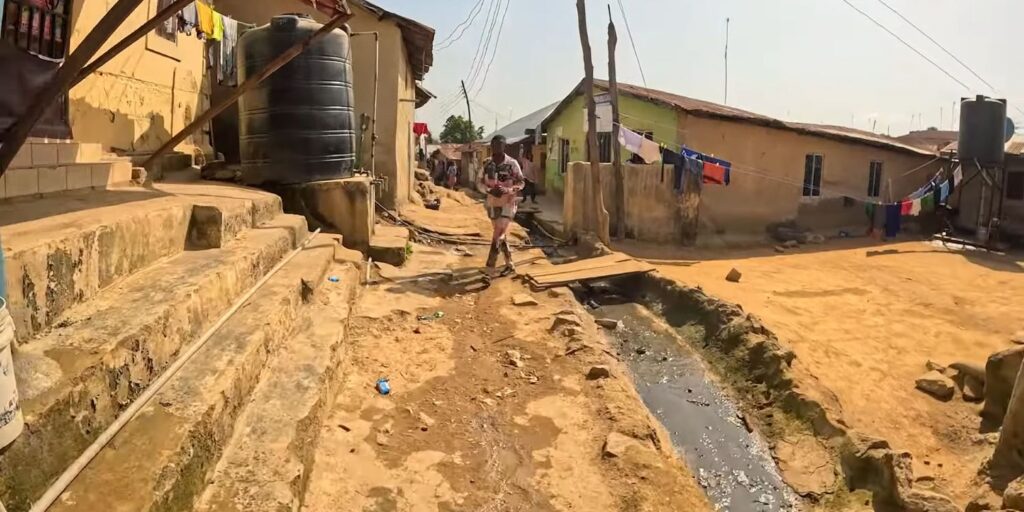
Current Rental Rates (2024-2025):
- Single Room (shared facilities): ₦120,000 – ₦150,000 annually
- Self-Contained Apartment: ₦150,000 – ₦250,000 annually
- One-Bedroom Apartment: ₦250,000+ annually
A local resident shared with researchers: “Before, getting a room here you could get it for 30 something, 45 or thereabout, that is N30000 to N450000. But now, getting a room now, a room is 120 upwards. (N120,000)”
Important Note: A “single room” in Mpape typically means you only have access to shared bathroom and kitchen facilities, usually located outside the compound or within the neighborhood at public bath houses called “Gidanwaka.”
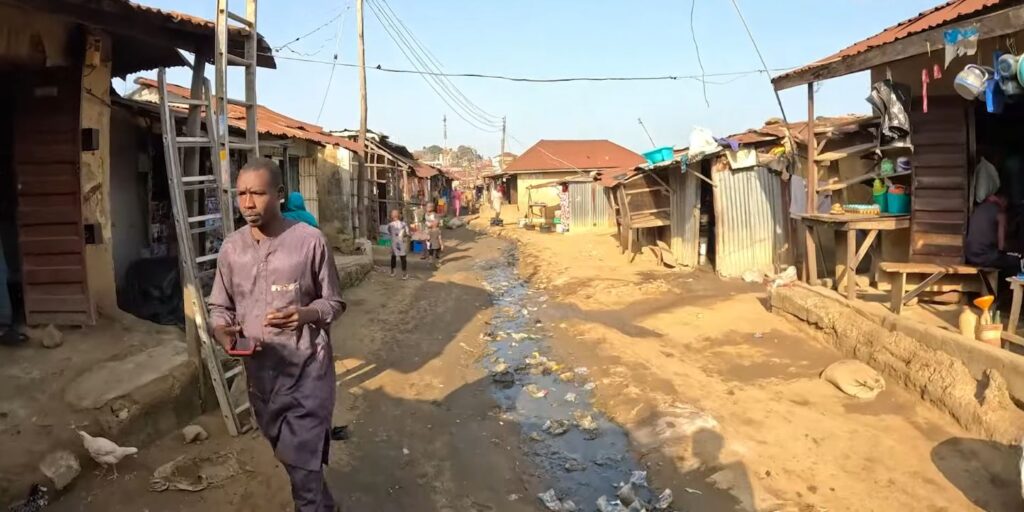
The Water Crisis
Water scarcity is one of Mpape’s most pressing challenges. The rocky terrain makes it extremely difficult to establish proper water infrastructure.
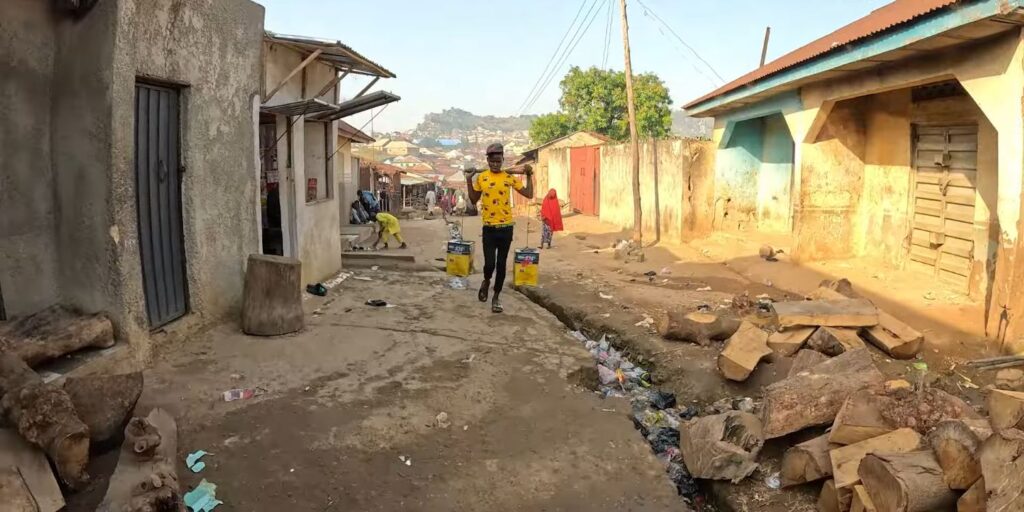
How Residents Get Water:
- Gidanwaka (Public Bath Houses): Residents pay to bathe at these facilities because they have water availability
- Water Vendors: Young men carry tanks on their necks, fetching water from available sources and selling it to households at premium prices
- Private Boreholes: The community relies entirely on private boreholes, and when there’s no electricity, water trucks cost ₦2,000
- Mpape Stream/Waterfall: Some residents still collect water from natural sources

According to the District Head, “We don’t have water. The Water Corporation does not serve there. The Rural Water Supply and Sanitation Agency does not provide the water”.
Infrastructure Deficits
The community struggles with numerous infrastructural challenges:
Roads:
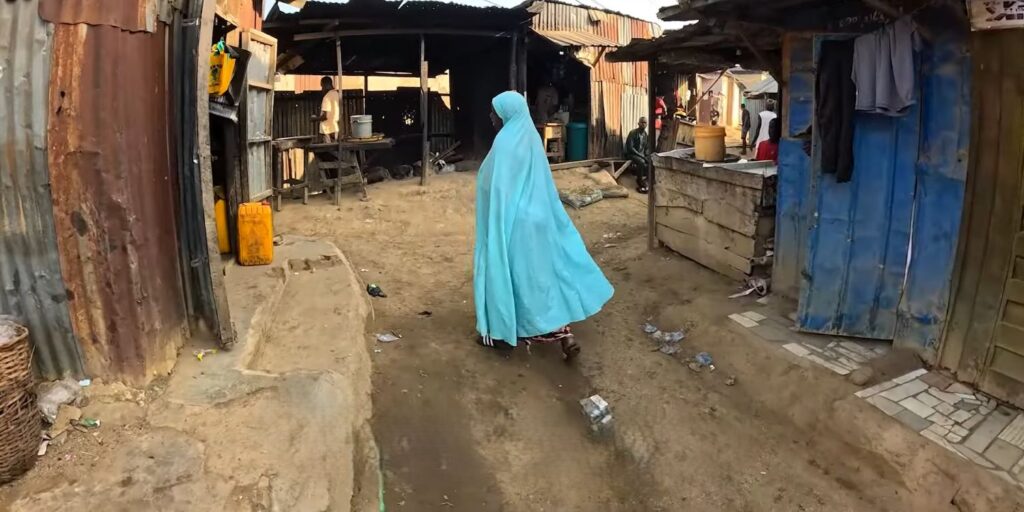
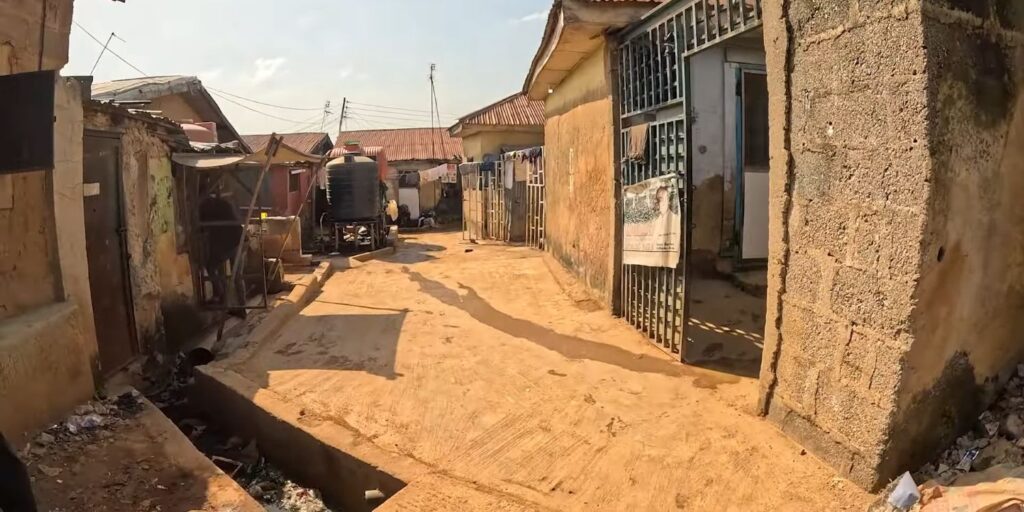
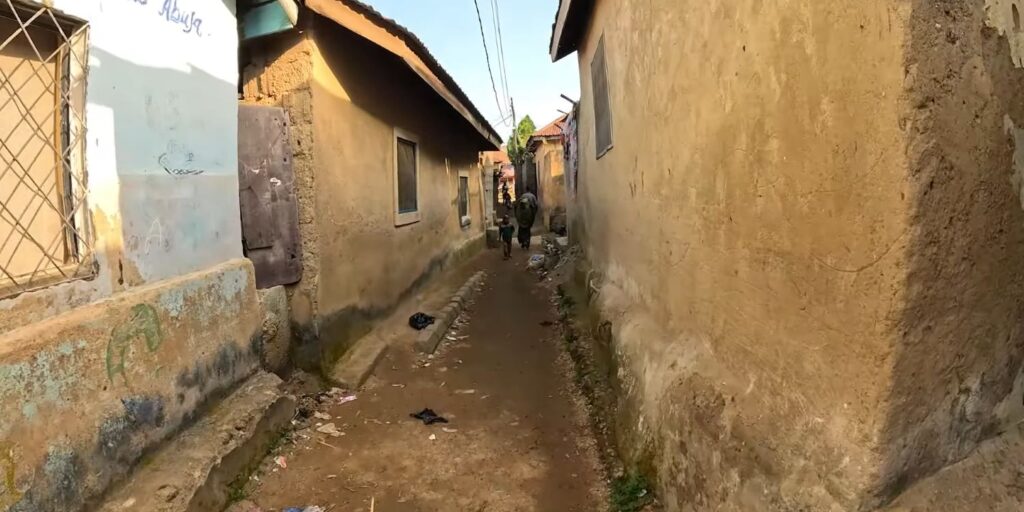
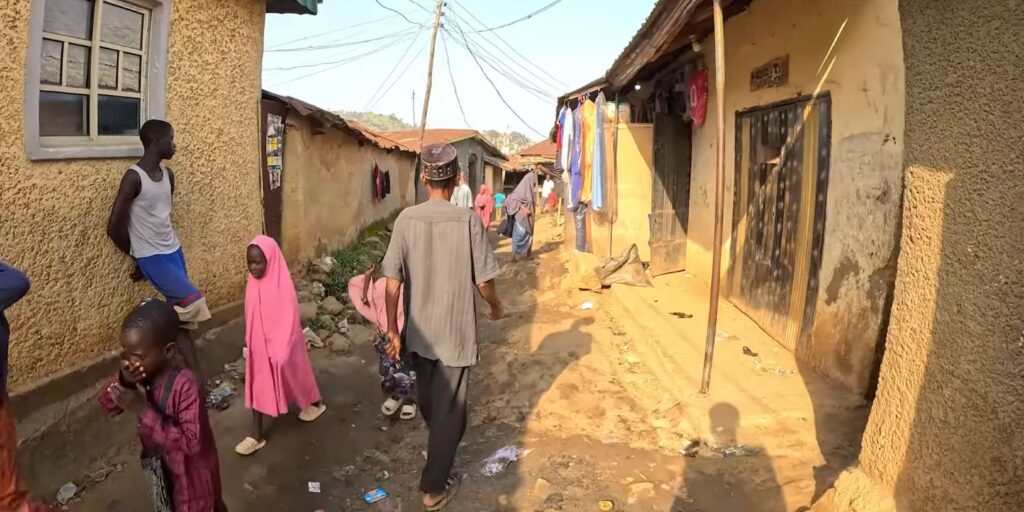
- Narrow, winding streets barely wide enough for one vehicle
- Most interior roads unpaved and muddy during rainy season
- Steep inclines due to hilly terrain
- One main tarred road serving the entire community
Drainage:
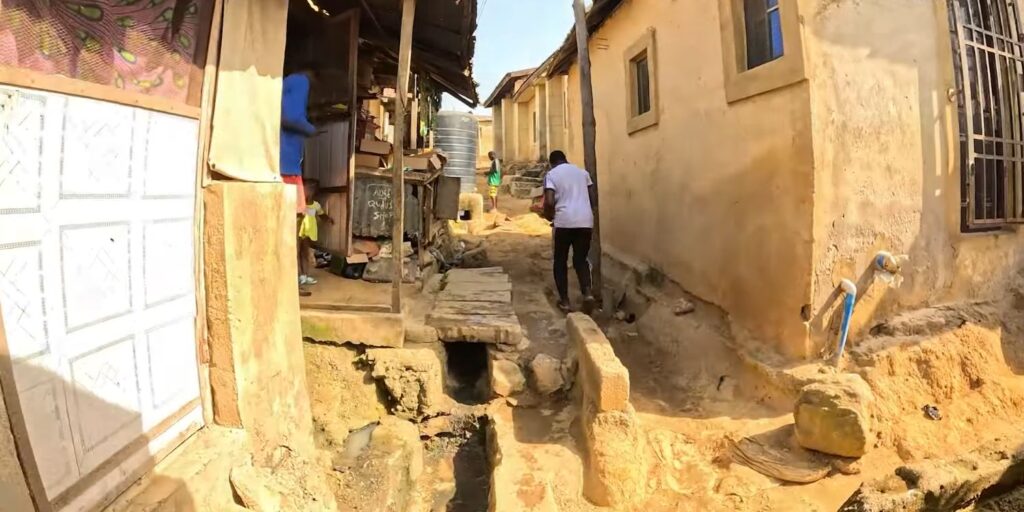
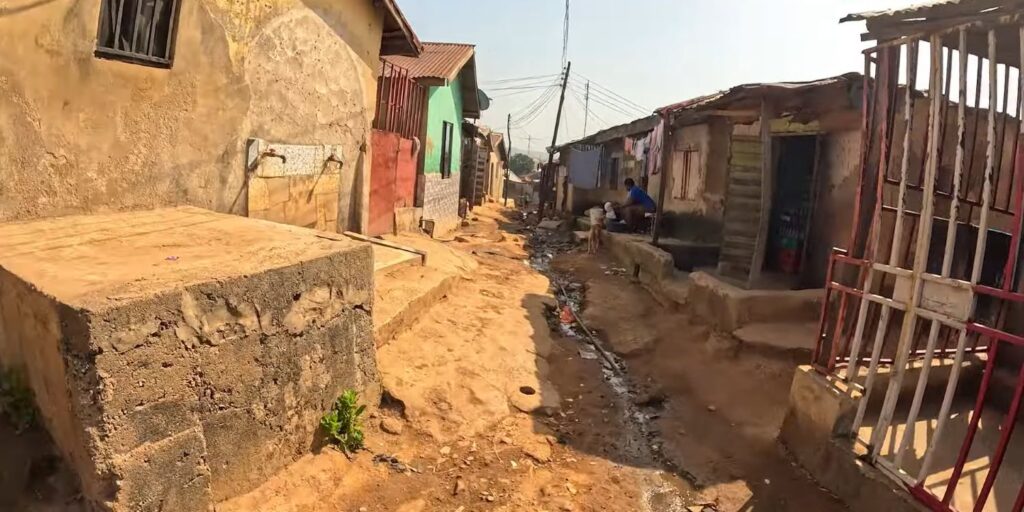
- Open gutters alongside roads
- Poor drainage system leading to flooding
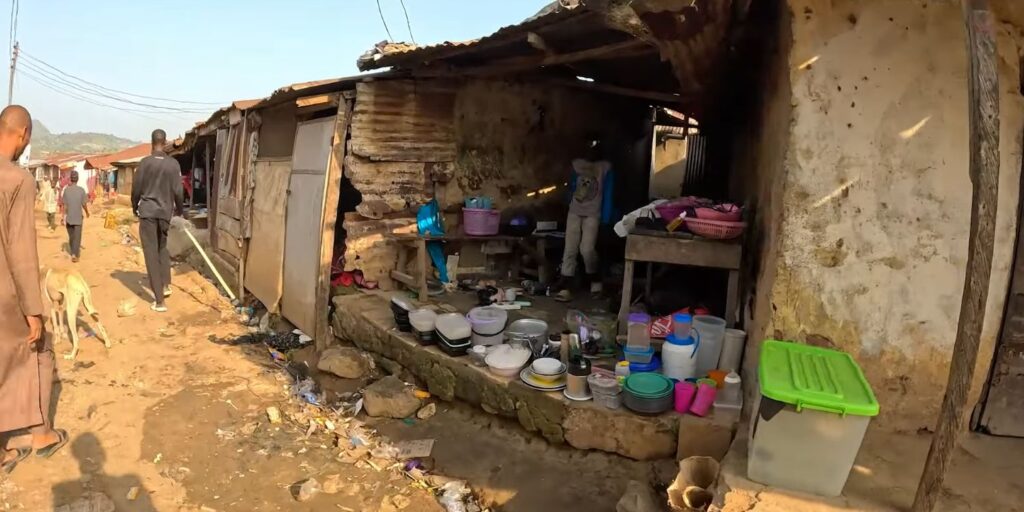
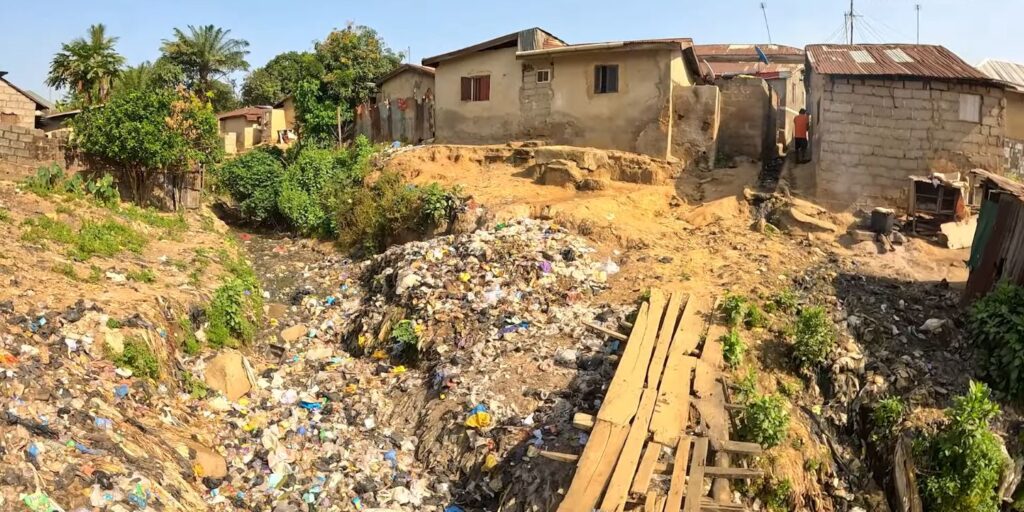
- Some drainages converted to refuse dumps
Electricity:
- Epileptic power supply
- Many areas experience rationed electricity (three days on, three days off)
Healthcare:
- Only one small health center serving the entire population
- No properly equipped general hospital
- Residents must travel to central Abuja for serious medical care
Sanitation:
- More than 30% of residents lack access to toilet facilities
- Open defecation remains a significant problem
- No public toilets in markets
- Many landlords construct houses without toilet provisions
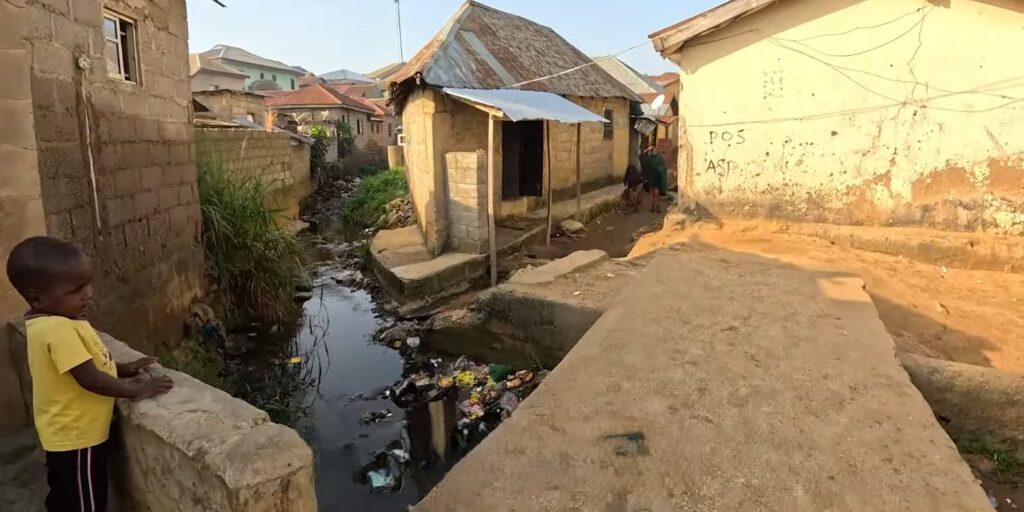
Mpape Market and Economic Life
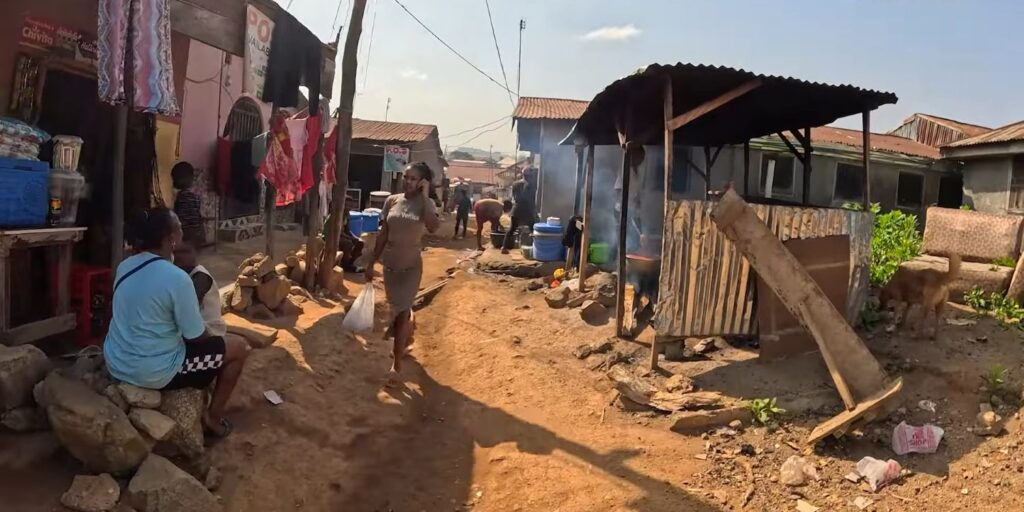
Despite the challenges, Mpape is a beehive of commercial activity. The community boasts:
- Mpape Market: The main commercial hub where residents buy daily necessities
- Mpape Modern Market: A more organized marketplace
- Commercial Banks: Several banking institutions have branches in the community
- Hotels and Guesthouses: Including establishments like Grange Hill Hotel & Resort
- Restaurants and Food Vendors: Countless informal food businesses
- Retail Shops: Everything from phone accessories to building materials
- Service Providers: Hairstylists, tailors, mechanics, and other artisans
One resident proudly stated: “Business is lucrative here. You can take advantage of the huge population.”
The Paradox: Slum Next to Wealth
Maitama vs. Mpape – Separated by an Expressway
The contrast between Mpape and neighboring Maitama couldn’t be sharper. The 10-lane Murtala Mohammed Express Way stands between Maitama and Mpape, creating a physical and socioeconomic divide that epitomizes Nigeria’s inequality.
Maitama:
- Luxury mansions and high-rise apartments
- 24-hour electricity supply
- Well-paved roads with street lighting
- Manicured lawns and green spaces
- Embassy Row and diplomatic residences
- Average annual rent: ₦3-10 million+
Mpape:
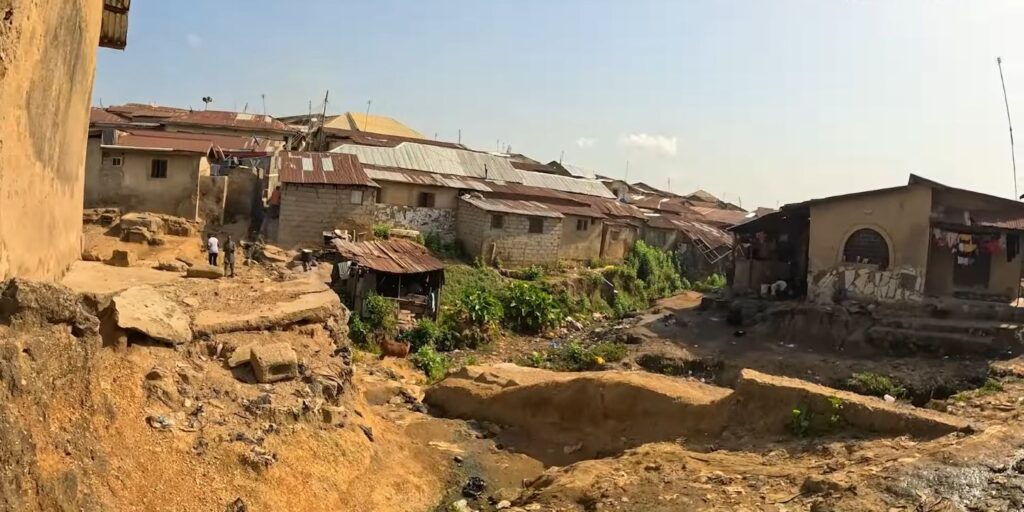
- Dense, unplanned housing on rocky hills
- Rationed electricity
- Narrow, unpaved interior roads
- No public water supply
- Working-class and low-income residents
- Average annual rent: ₦120,000-₦250,000
This proximity is precisely why many Mpape residents choose to stay – they can walk to work in Maitama or take a short, affordable commute to other parts of central Abuja.
Is Mpape Maitama Extension?
Locals often humorously refer to Mpape as “Maitama Extension” or “Maitama 2” – a tongue-in-cheek reference to its proximity to the wealthy district. However, the reality couldn’t be more different. While areas to the south are sometimes called Maitama 2 or Maitama Extension, Mpape itself remains a largely undeveloped informal settlement.
Environmental and Safety Concerns
Earth Tremors and Geological Instability
Mpape residents periodically experience earth tremors – a reminder of the area’s quarrying past and geological vulnerability. In September 2024, residents experienced tremors that threw the community into panic, with the Nigerian Geological Survey Agency confirming multiple epicenters located around the Mpape axis.
The tremors are attributed to:
- Accumulated stress along geological fault lines
- Ongoing quarry blasting activities
- The rocky, unstable terrain
While authorities have assured residents the tremors are weak and pose low threat, the experience underscores the precarious nature of life in Mpape.
Security Challenges
Mpape has gradually become a hotbed for crimes ranging from phone snatching on streets to house burglaries and armed robbery, with deadly cult clashes occasionally forcing residents to flee their homes.
Common security issues include:
- Phone and purse snatching in broad daylight
- Armed robbery at gunpoint
- Cult gang activities
- House breaking and burglary
- Nighttime attacks on residents
The situation has prompted community leaders to collaborate with security agencies, leading to several arrests. However, the dense population and maze-like streets make law enforcement challenging.
Health and Epidemic Risks
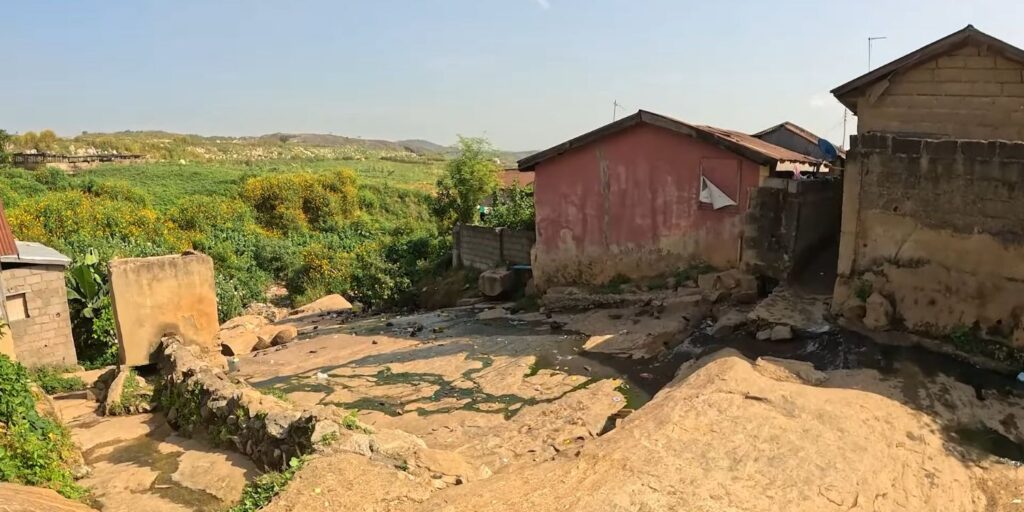
The poor sanitary conditions create vulnerability to disease outbreaks. In 2014, a disease outbreak in Unguwar Rimi affected scores of residents and reportedly killed some, with symptoms including diarrhea and vomiting, likely cholera.
Health risks stem from:
- Open defecation in some areas
- Inadequate waste management
- Contaminated water sources
- Overcrowding
- Poor drainage and stagnant water
- Limited healthcare facilities
The Demolition Threat: Living Under a Sword
A Community Under Siege
Perhaps the most defining characteristic of life in Mpape is the perpetual fear of demolition. Houses have been marked for demolition by the Federal Capital Development Authority (FCDA) since 2012, creating an atmosphere of uncertainty.
The government’s rationale for potential demolition includes:
- Lack of proper urban planning
- Encroachment on government land
- Environmental and health hazards
- Desire to “beautify” the capital city
Residents Fight Back
On February 2, 2017, residents won a court case they had instituted since 2012 to stop FCDA from demolishing their houses. The community has staged several protests and leveraged legal channels to resist displacement.
Residents argue:
- Many have lived here for 20+ years and built their lives
- No alternative accommodation provided
- Compensation packages are inadequate
- The community contributes significantly to Abuja’s economy
One resident captured the sentiment: “When I came to Abuja, I was told that rich people want to take over here by destroying all these houses here.”
Mpape’s Cultural Diversity and Community Spirit
A Melting Pot
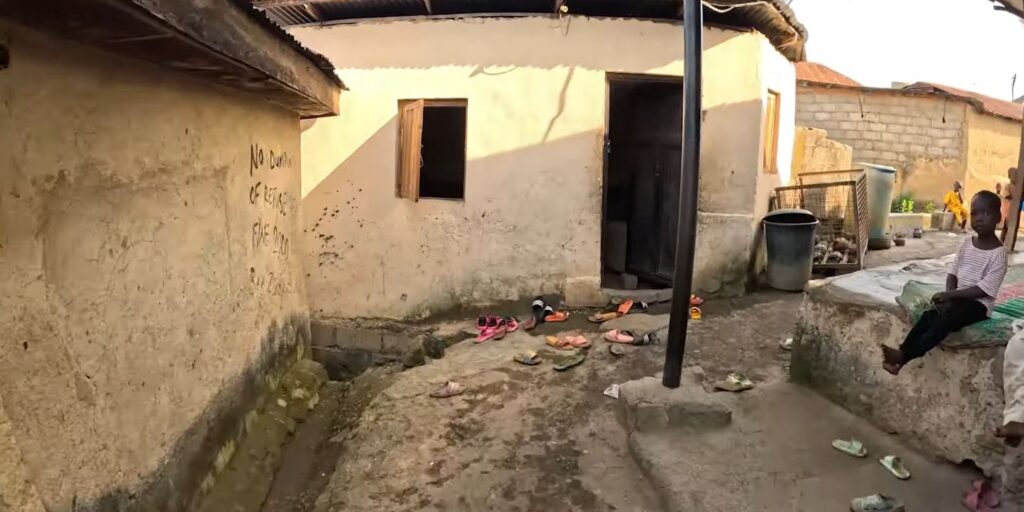
Despite being predominantly inhabited by migrants, Mpape maintains its connection to the indigenous Gbagyi (Gwari) people while hosting residents from across Nigeria.
Major Ethnic Groups:
- Gbagyi/Gwari (indigenous)
- Hausa/Fulani
- Igbo
- Yoruba
- Ebira
- Various minority groups
The community has ethnic leaders representing different groups who meet monthly to discuss community affairs and maintain peace.
The Peaceful Reputation
Despite infrastructural challenges and security concerns, residents take pride in Mpape’s peaceful atmosphere and age-long intertwined relationships between different ethnic groups.
Community leaders emphasize:
- Ethnic and religious tolerance
- Collective problem-solving
- Mutual support systems
- Peaceful coexistence
Which LGA is Mpape In? Administrative Details
Local Government Authority
Mpape falls under Bwari Area Council, one of the six local government area councils that constitute the Federal Capital Territory (FCT).
Bwari Area Council Details:
- Created in 1991
- Predominantly home to the Gbagyi ethnic group
- Located about 28 kilometers north of Abuja city center
- Houses key institutions like Nigerian Law School, JAMB headquarters, and Usuma Dam
- Postal Code: 901101
Mpape’s Administrative Ward: Mpape is part of the Dutsen Alhaji Ward (Ward 04) under Bwari Area Council, with multiple polling units serving the community during elections.
Zip Code for Mpape Abuja
Mpape Postal/Zip Code: 901101
This is the standard postal code for all areas within Bwari Area Council, including Mpape and its various neighborhoods.
Getting to Mpape: Directions and Transportation
Mpape Junction Location
The Mpape Junction is located on the Murtala Mohammed Expressway, clearly marked and easily accessible from both directions (Kubwa-bound and Asokoro-bound lanes).
Transportation Options:
By Public Transport:
- Keke NAPEP (Tricycles): Most common within the community
- Okada (Motorcycles): Navigate the narrow interior streets
- Danfo Buses: Connect Mpape to major Abuja districts
- Shuttle Buses: Regular routes to Kubwa, Nyanya, and city center
By Private Vehicle:
- From city center: Take Murtala Mohammed Expressway heading toward Kubwa
- Exit at Mpape Junction
- Navigate the winding main road into the community
- Caution: Interior roads are narrow; larger vehicles may struggle
Nearby Landmarks:
- Maitama District (across expressway)
- Katampe Extension
- Mobile Police (MOPOL) 24 Barracks
- Grange Hill Hotel & Resort
- Maitama Hills
Mpape Lake and Waterfall: Hidden Natural Features
Mpape Waterfall
Hidden within the rocky terrain is a natural waterfall/stream that serves as both a water source and recreational spot for some residents. The stream flows down from the hills, creating small pools along its path.
Features:
- Natural spring water flowing through rocks
- Multiple levels with small cascades
- Used by some residents for water collection
- Accessible via narrow paths through the community
Safety Note: The paths to the waterfall can be challenging to navigate and aren’t well-maintained. Visitors should exercise caution and ideally go with a local guide.
Mpape Lake
While not a traditional lake, there are water collection points and pools formed by streams that locals refer to as lakes, particularly during the rainy season when water accumulates in rocky depressions.
Mpape Weather and Climate
Weather Patterns
Mpape experiences the same tropical savanna climate as the rest of Abuja:
Hot Season (January – April):
- Temperature: 86°F – 100°F (30°C – 38°C)
- Hottest month: March
- Dry and dusty conditions
- Harmattan winds (December – February)
Rainy Season (April – October):
- Temperature: 75°F – 90°F (24°C – 32°C)
- Heavy rainfall, especially June – September
- High humidity
- Flooding in low-lying areas
Cold/Harmattan Season (November – February):
- Temperature: 59°F – 87°F (15°C – 31°C)
- Coldest month: December
- Clear skies but dusty air
- Cool nights
The hilly terrain means temperatures can be slightly cooler than in the flat central areas of Abuja, with better air circulation.
Investment Potential: The Future of Mpape
Why Investors Are Watching
Despite its current state, Mpape has lots of potential due to its excellent location near Maitama, hilly nature, and plans for future development, making it an attractive investment.
Factors Driving Interest:
- Prime Location: Immediate proximity to Abuja’s most expensive district
- Land Scarcity: Limited available land in central Abuja
- Infrastructure Plans: Government discussions about developing the area
- Rising Property Values: Prices steadily increasing year-over-year
- Panoramic Views: Hilltop properties offer stunning city views
The Gentrification Dilemma
Herein lies the irony: the same factors that make Mpape attractive to investors threaten the very residents who built the community. If development proceeds, current residents fear:
- Forced evictions and demolitions
- Skyrocketing property prices
- Displacement without adequate compensation
- Loss of community and livelihoods
The tension between urban development and residents’ rights remains unresolved.
Apartments and Housing Options in Mpape
Types of Accommodation:
1. Single Room (Shared Facilities):
- One room only
- Shared kitchen (usually outside)
- Shared toilet/bathroom (sometimes communal)
- Annual rent: ₦120,000 – ₦150,000
- Most common option for low-income residents
2. Self-Contained (Room and Parlor with Private Facilities):
- One room with private bathroom
- Small kitchenette or cooking area
- Annual rent: ₦150,000 – ₦250,000
- Popular among young professionals
3. One/Two-Bedroom Flats:
- Complete apartments with multiple rooms
- Private facilities
- Annual rent: ₦250,000 – ₦500,000+
- More common in Berger Quarry area
4. Newer Developments:
- Emerging mini-estates in Phase II
- Better construction quality
- Modern amenities
- Higher rent: ₦400,000 – ₦700,000+
Housing Construction:
Most buildings in Mpape are:
- Self-built by landlords without proper permits
- Constructed with basic materials (cement blocks, corrugated iron roofing)
- Multi-story to maximize limited space
- Built on slopes and rocky outcrops
- Lacking proper foundation due to rocky terrain
- Some houses literally perched on hills
Facilities and Amenities
What Mpape Has:
Commercial:
- Mpape Market (main market)
- Modern Market
- Numerous shops and kiosks
- Several banks (First Bank, Access Bank, etc.)
- Hotels and guesthouses
- Bakeries and restaurants
Religious:
- Mosques
- Churches (various denominations)
- Religious schools
Educational:
- Several primary schools
- Secondary schools
- Private nursery schools
- Adult education centers
Social:
- Community halls
- Viewing centers
- Small recreational spots
- Barbershops and hair salons
What Mpape Lacks:
- Public hospital or well-equipped health center
- Public toilets in markets
- Proper waste management system
- Public water supply
- Well-paved interior roads
- Street lighting in most areas
- Police station (nearest is in Bwari town)
- Fire service station
- Functional drainage system
- Public parks or green spaces
The Human Stories: Voices from Mpape
Long-Term Residents
Many residents have called Mpape home for 15-20+ years, building businesses and raising families despite the challenges. They speak of:
- Strong community bonds
- Affordable living allowing them to save money
- Proximity to work reducing transportation costs
- Cultural diversity and tolerance
- Growing up in the community and not knowing anywhere else
Economic Migrants
Others arrived in Mpape after government demolished their previous settlements:
- Displaced from Karmo, Apo, Lugbe, and other areas
- Mpape became the natural refuge
- Appreciate the vibrant commercial activity
- Build new lives and businesses
- Fear repeated displacement
Daily Commuters
Thousands work in highbrow Abuja districts but live in Mpape:
- Domestic workers in Maitama and Asokoro
- Security guards at government institutions
- Traders at Wuse Market
- Artisans serving the city
- Government office cleaners and support staff
These are the invisible workers who keep Abuja functioning while living in conditions most city residents never see.
Social and Environmental Impact
Impact on Abuja
Stakeholders warn that Mpape’s poor sanitary situation has implications not only for the community but for the Abuja city center itself, as residents carry diseases between the slum and wealthy areas where they work.
The connection works both ways:
- Mpape residents serve the needs of wealthy Abuja
- Diseases and health issues spread across class boundaries
- Environmental degradation affects surrounding areas
- Social inequality creates tension and resentment
- Economic interdependence binds the communities
The Waste Problem
Solid waste management is a critical challenge:
- Massive dump sites at community entrance
- No organized waste collection system
- Open burning of refuse
- Waste blocking drainage channels
- Environmental and health hazards
Mountain-sized garbage heaps greet visitors entering Mpape – a stark symbol of government neglect and infrastructural failure.
Government Response and Urban Planning
The Planning Failure
Mpape has no city plan, regional plan, area plan, or district plan – it exists entirely outside Abuja’s formal planning structure.
This reflects broader issues:
- Over 45 years after Abuja’s creation, the dream of a well-planned modernized city remains unrealized amid growth in informal settlements
- Government has prioritized demolition over integration
- No sustainable solutions for informal settlement dwellers
- Lack of political will to address root causes
Calls for Action
Community leaders and civil society organizations advocate for:
- Urban Renewal: Upgrade existing structures rather than demolish
- Infrastructure Investment: Roads, water, healthcare, sanitation
- Regularization: Grant residents legal tenure security
- Building Codes: Enforce proper construction standards going forward
- Social Services: Schools, health centers, public utilities
- Economic Support: Formalize businesses, provide skills training
The question remains: Will government invest in integrating Mpape into Abuja’s fabric, or continue viewing it as a problem to be eliminated?
Frequently Asked Questions (FAQs)
Where exactly is Mpape located in Abuja?
Mpape is located in the Federal Capital Territory (FCT), under Bwari Area Council. It sits directly opposite the Maitama district, across the Murtala Mohammed Expressway, and is approximately 10 minutes from Abuja city center. Geographically, it lies between Latitudes 9.175699° and 9.113010° north and Longitudes 7.463892° and 7.524349° east.
What is the population of Mpape?
Estimates vary widely, ranging from hundreds of thousands to over 2 million residents. Most sources agree Mpape houses over 1 million people, with approximately 60,000 houses in the community, making it the largest slum settlement in Abuja.
How much is rent in Mpape?
Current rental costs (2024-2025) are:u003cbru003eSingle room (shared facilities): ₦120,000-₦150,000 per yearu003cbru003eSelf-contained apartment: ₦150,000-₦250,000 per yearu003cbru003eOne-bedroom flat: ₦250,000+ per yearu003cbru003eBetter areas like Berger Quarry: ₦400,000-₦700,000 per year
What is the postal code/zip code for Mpape?
The postal code for Mpape is u003cstrongu003e901101u003c/strongu003e, which is the standard code for all areas within Bwari Area Council.
Which local government / Area Council is Mpape under?
Mpape falls under u003cstrongu003eBwari Area Councilu003c/strongu003e, one of the six local government area councils that make up the Federal Capital Territory (FCT). Specifically, it’s part of the Dutsen Alhaji Ward.
Is Mpape safe to live in?
Mpape has mixed safety conditions. While the community is known for peaceful ethnic coexistence, there are security challenges including phone snatching, burglary, and occasional cult-related violence. Many long-term residents consider it safe enough to raise families, but visitors should exercise caution, especially at night.
Why is Mpape called a slum?
Mpape is classified as a slum due to:u003cbru003eUnplanned, informal housing developmentu003cbru003eLack of basic infrastructure (water, proper roads, sanitation)u003cbru003ePoor living conditions and overcrowdingu003cbru003eNo building permits or regulations enforcedu003cbru003eOpen drainage and waste disposal issuesu003cbru003eLimited access to healthcare and social servicesu003cbru003eOver 30% of residents lack toilet facilities
What is Mpape Crushed Rock?
Mpape Crushed Rock (also called Berger Quarry) refers to the quarrying and rock crushing operations that historically took place in the area. These operations provided building materials for Abuja’s construction. Some quarries are still active today, while others have been abandoned, but they remain a defining feature of Mpape’s landscape and history.
Will Mpape be demolished?
The threat of demolition has hung over Mpape since 2012 when the Federal Capital Development Authority (FCDA) marked houses for removal. However, residents won a court case in 2017 halting demolition. The situation remains uncertain – while government periodically threatens demolition as part of urban renewal plans, the massive population and legal resistance make wholesale demolition politically and practically difficult. The community’s future remains in limbo.
How do I get to Mpape from Abuja city center?
By road: Take the Murtala Mohammed Expressway heading toward Kubwa and exit at Mpape Junction (clearly signposted)u003cbru003ePublic transport: Board buses or u0022danfou0022 going to Mpape/Kubwa from Berger Junction, Wuse, or other central locationsu003cbru003eFrom Maitama: You can literally walk across the expressway (about 10 minutes) or take a quick taxi/keke rideu003cbru003eTravel time from city center: 10-15 minutes depending on traffic
Are there hotels or places to stay in Mpape?
Yes, Mpape has several hotels and guesthouses, including Grange Hill Hotel u0026amp; Resort and numerous budget accommodations. However, most visitors to Abuja stay in central districts like Garki, Wuse, or Maitama rather than Mpape.
Is Mpape really the biggest slum in Abuja?
Yes, by all accounts, Mpape is the largest slum settlement in Nigeria’s federal capital. While Abuja has other informal settlements like Kpaduma, Apo Mechanic Village, Karmo, and others, none match Mpape’s size, population density, or geographic scope. Its status as Abuja’s biggest slum is widely acknowledged by government agencies, researchers, and residents alike.
Why do people live in Mpape despite the poor conditions?
u003cstrongu003eAffordability:u003c/strongu003e Much cheaper than central Abujau003cbru003eu003cstrongu003eProximity:u003c/strongu003e Less than 10 minutes from major employment areasu003cbru003eu003cstrongu003eTransportation Costs:u003c/strongu003e Low commute expenses to city centeru003cbru003eu003cstrongu003eEconomic Opportunities:u003c/strongu003e Vibrant informal economyu003cbru003eu003cstrongu003eCommunity:u003c/strongu003e Strong social networks and mutual supportu003cbru003eu003cstrongu003eNo Alternative:u003c/strongu003e Many cannot afford housing elsewhereu003cbru003eu003cstrongu003eDisplaced:u003c/strongu003e Previous settlements were demolished
Can I buy land or property in Mpape?
Property transactions occur in Mpape, but extreme caution is advised:u003cbru003eMost land lacks proper title or documentationu003cbru003eGovernment views much of Mpape as illegally occupiedu003cbru003eRisk of future demolition remainsu003cbru003eLegal disputes are commonu003cbru003eConsult a real estate lawyer before any purchaseu003cbru003eVerify ownership through FCDA and Bwari Area Councilu003cbru003eConsider the uncertainty before investing
Conclusion: The Tale of Two Cities Continues
Mpape represents both the failure and resilience of urban Nigeria. It’s a monument to government’s inability to provide affordable housing and basic services, yet simultaneously a testament to the indomitable spirit of ordinary Nigerians who build lives and communities against overwhelming odds.
As Abuja continues expanding and property values in central areas soar, Mpape’s future hangs in the balance. Will it be demolished and its million-plus residents displaced to make way for high-rise developments and luxury estates? Or will government finally recognize the community’s legitimacy and invest in upgrading infrastructure while allowing residents to remain?
The proximity to Maitama serves as a daily reminder of Nigeria’s stark inequality – two worlds separated by a ten-lane highway, yet inextricably linked. The domestic workers, security guards, traders, and artisans who keep wealthy Abuja functioning return each evening to the sprawling, underserved hillside community.
For now, life continues in Mpape. Children walk to school along narrow, rocky paths. Women balance water containers on their heads, purchased from vendors. Markets buzz with commercial activity. Churches and mosques overflow on worship days. Young people dream of better opportunities while making the most of what they have.
Mpape is not just the biggest slum in Abuja – it’s home to over a million people who deserve better. It’s a call to action for sustainable urban development that includes rather than excludes, that builds up rather than tears down, that recognizes the dignity and rights of all citizens regardless of income level.
The story of Mpape is, ultimately, the story of Nigeria itself: a nation of immense potential struggling with the challenges of rapid urbanization, governance failures, and inequality. Until comprehensive solutions emerge that prioritize human dignity alongside urban development, Mpape will remain a powerful symbol of the work still needed to build a truly inclusive capital city.
Watch the full documentary: Entering Nigeria’s Biggest Slum – Abuja
Video credit: @yomisams
Other interesting articles about Abuja
- How Much is House Rent in Abuja?
- Most Expensive House in Abuja
- Old Peoples Homes in Abuja
- Embassies in Abuja
- Free Fun Things to Do in Abuja
- Best Picnic Spots in Abuja
- Top 10 Most Visited Landmarks in Abuja
- Is Abuja Secured? Find Out
- Abuja Metro Train: Routes, Schedule, Ticket Prices
- Public Transport in Abuja: The Complete Guide
- Best Places to live in Abuja on a budget
- Benefits of living in Abuja